Monday, 6 November 2017

Shehan Madawela; Rice

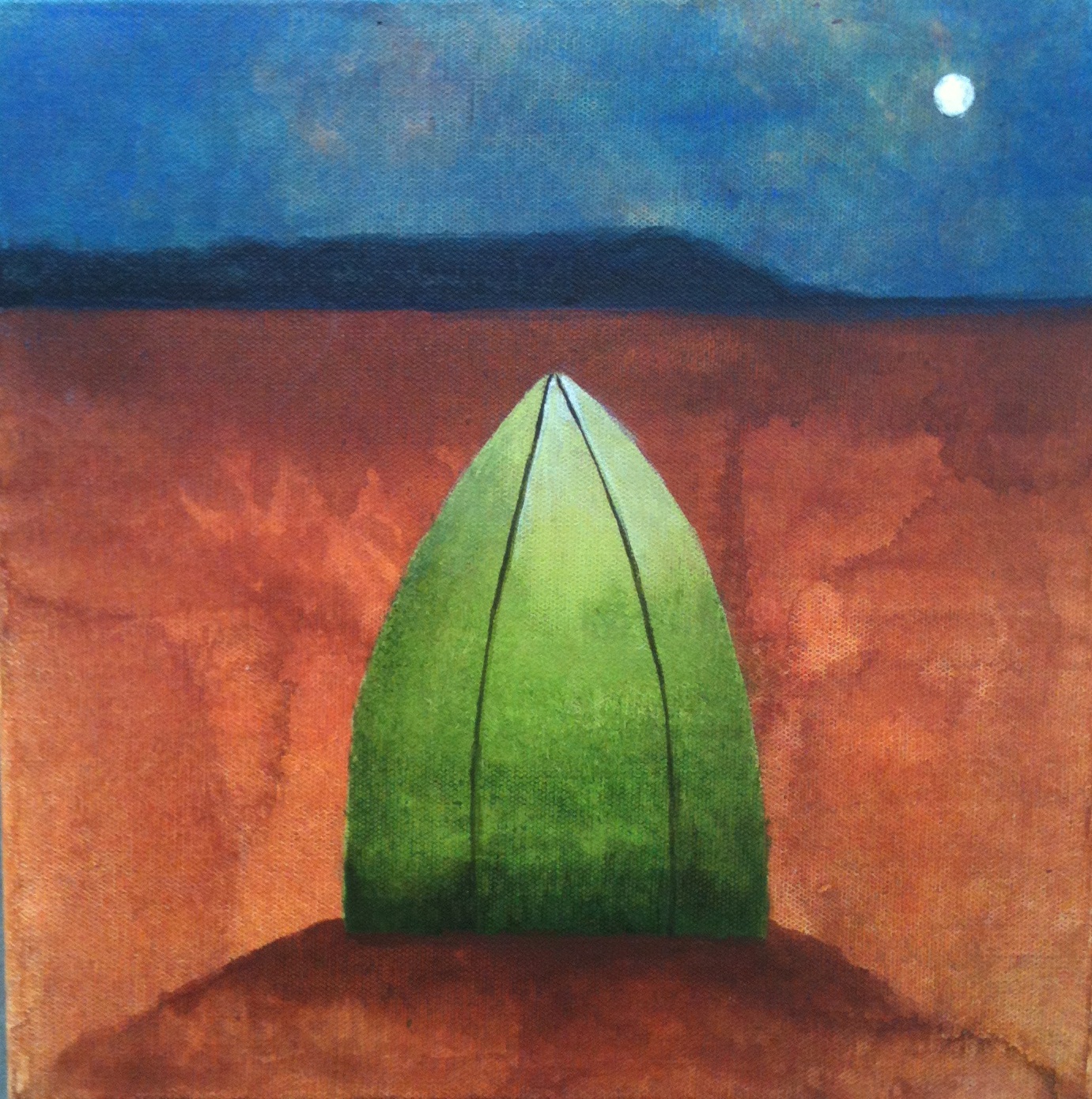
Part of the artist's 'Rice Series'
There is an underlying eroticism in the works of the Sri Lankan artist Shehan Madawela, who hails from a Buddhist/Anglican family. Subconscious lingams (phalluses) arise in the guise of rice seeds. Yonis (pudenda) appear, disguised as bowls for rice or as triangles. Sexual symbolism abounds in Madawela’s most prominent series, the Rice series.

In these works, Madawela ‘talks’ of the overcoming of desire (kāma) born of nutrition or of reproduction. Rice, symbol of Lakshmi, a staple food, the colour and symbol of eternity and continuance, a seed of modified grass, symbolic both of the progenitor of seed (the phallus or lingam) and of man’s seed, vital for the growth of species.

The blue rice bowl is indicative of Rama/Krishna, of protection and the universe, but also becomes seen as the symbol of the receptacle of man’s seed (sperm), as woman, necessary for rebirth. The reverse highlights the need for material, as well as metaphorical, sustenance, the physical need for food. The symbol for which becomes rice, of which India once had over 400,000 varieties in the Vedic period.

As if we were in doubt of the significance of the imagery, Madawela litters his works with human figures, women with transparent, revealing, tops, showing their femininity. Occasionally, strategically placed green leaves are present to shelter a post-Eden modesty. The metaphors are mixed, as is the Indian religious persona. In a country where all the major religions abound, families frequently have mixed religious backgrounds, Buddhist, Christian, Hindu, Muslim and others. This religious fusion shines through in Madawela’s works.

Paintings such as Maha Shiva Ratri (mixed media on canvas), present the more overt Indian religious nature of the Lingam/Yoni duality. In this painting, there is no room for doubt of the Shaivite connection, A prominent lingam protrudes from the folds of a yoni. A (rice) seed rises to an ovum/moon. The background coloured red/brown, deep terracotta, talks not just of the earth but of that passion of procreation, the vital energy necessary for the process.

Madawela explains that 'the rice series started as a result of seeing development take over farmland at an amazing pace in india, and where staples like the precious rice grain (which feeds most of the world), and is a farmers way of life, were exchanged readily for money where  real estate giants made a killing and where a way of life that has been around for centuries, came to an abrupt end....This is a precious grain which needs to be glorified and given its due respect for what it has given to mankind for its sustenance in the past, at the present and in the future.......'

Sunday, 5 November 2017

Pipe Dreams: Intimations of Chia Yu Chian

Chia by Cheong Soo Pieng
Chia Yu Chian was born in 1936, and died in 1990, aged 54. In its infinite wisdom, art history has included Chia into the prestigious Nanyang hall of fame, not just for his extraordinary and poignant output as an artist, but for his due diligence to his craft and his dedication to capturing Singapore and Malaya/Malaysia as they were, with all their humanity and brilliance, during his brief, but dynamic, lifetime.

In this pipe dream I enter stage right. The Malaysian evening has grown unusually temperate. The coalescence of heat and humidity has precipitated curiously aesthetic banks of white clouds. They are partially shaded with roseate gold and cerulean, emerging prominent from a still bright, cobalt, sky. Those clouds are formed as if stacks of smoke from a well-worn pipe had suddenly, momentarily, appeared outside the house where Malaysian artist Chia Yu Chian had lived (in Bandar Sri Petaling, Kuala Lumpur). Those clouds become frozen. Briefly static. Anticipating the hand of the artist to commit that act of mimesis which Plato (in the Republic) had been so concerned over, for Chia liked huge skies, as we can see in his ‘View of Jinjang, Selangor (1969-1972).

I had travelled to converse with Leong Siew Hong (Chia Yu Chian’s wife), Chia Chee Ping (his younger son) and Chia Meow Lin (his daughter), who are among those who had known the artist Chia Yu Chian best. I had the honour of being able to dine with them, not in the Western concept of style but in the alternate Cantonese way of having deliciously fresh food, freshly cooked in an environment paying homage to that and nothing else. In the rambunctious Chinese ambience of that local restaurant, meaningful conversation, unless about the meal itself, became subservient to the sumptuousness of the feast. Wisps of real conversation, about Chia Yu Chian, became a delicacy to be savoured later.

That repast was a precursor to the main ‘meal’. It was the concrete appetiser to a contextual meal of conviviality, reminiscence and remembering, bound over for the quieter environment of the family home. Over slim glasses of red wine, in a downstairs room provoking memories of the artist, conversations arose in Mandarin and English. It was to become but a taster, concerned with the family’s recollections of Chia and of conversations regretfully never began with the artist. The more I learned, the more I wanted to know.

I had climbed down a small staircase to that dinning area, noticing shelves of art books. Herbert Read’s ‘Art Now’, Thames & Hudson’s ‘Picasso’ and ‘Maitres de L’Art Moderne’ struck me in their significance, before I descended to listen. Taking one step at a time, I simultaneously looked at each photograph as I passed, down and through that passageway. Without knowing I was, unwittingly, following in the footsteps of Singaporean Dr. Bridget Tracy Tan, who had visited Chia’s home when she had been the Director (Art & Corporate Knowledge) of the Nanyang Academy of Fine Arts (NAFA). She had been there to write about Chia for the catalogue ‘Chia Yu Chian in Nanyang’, for the 2009 exhibition of his works. In the catalogue she had given very vivid descriptions of the interior of Chia’s house, the same house I had come to these years later.

Nine years after the Nanyang Academy’s resurrection, in 1946, from its closure due to Second World War (1941 to 1945), Lim Hak Tai, in 1955, and as Founding Principle for the Nanyang Academy of Fine Arts, included within the academy’s philosophical concepts a fusion of cultures of different races, a bridging of Eastern and Western art, and an expression of local, tropical flavour. A ‘style’ gradually became noticeable, springing from these essential notions. The founding ideas of a new style (Nanyang Style) was intimated to be a fusion of Chinese art, art considered to be School of Paris, and depictions of life, flora and fauna from the Nanyang, or lands bordering the South China Sea. These axioms are essential to the understanding of the essence of Chia Yu Chian’s early works, and the overall spirit of his subsequent paintings.

From looking at those early works, created in an embryonic Singapore before Chia’s Parisian sojourn, there is no doubt that the artist could, should and would create a niche for his oeuvre within the annals of Nanyang, perhaps even of South East Asian painting.

The dream was beginning to come true. That dream was aided and abetted by Chia being tutored in Singapore, by two notable ‘Nanyang’ painters, Chen Wen Hsi (Singapore Chinese High School) and Cheong Soo Pieng (Nanyang Academy of Fine Art). Though, as an interview (1973) with the late art historian and artist Redza Piyadasa explained, Chia was never officially at the Nanyang Academy of Fine art, but was able to exhibit with those artists, and evidently drew a great deal of influence from his proximity to them.

Chia’s daughter, Chia Meow Lin, explained that during those Malayan years, before Merdeka (independence), there was a longing, an urging amongst the younger people to leave for the West. Chia (her father) had taken a few months at the British Council, Singapore, learning English, and later at Alliance Française learning French. No doubt with the idea of gleaning fresh ideas for his art, from a stay abroad. Chia was a very outgoing person who made friends easily.

It was fortuitous that Chia received a French Government Scholarship to study art, in Paris. Jean Aurillac, the French Consular General to Singapore at that time, had authenticated a certificate written by the Director of the Nanyang Academy of Fine Arts (NAFA) to allow Chia to study at the Ecole Nationale Superieure des Beaux Arts de Paris, from 1959 to 1962, under the guidance of Professor Roger Chapelain-Midy.

A ‘Straits Times’ article (28th June, 1959, page 5) explains that in the February of 1959, Chia Yu Chian had entered France. He lost no time in making his mark there, for from the 4th of July until the 27th of that year, Chia held a one-man exhibition of his Malayan and Parisian artworks, at the Galerie de Villiers, in Paris.

Before Chia had travelled to France, he held an exhibition in Kuala Lumpur. It was there that he was to meet his future wife, Leong Siew Hong, who already had an interest in art. The story goes that she arrived late for the exhibition opening and, being a gentleman, Chia escorted the lady back home in the dark. A relationship was sparked. They communicated through letters while Chia was away and, on his return, he took a taxi all the way to Banting, where Leong Siew Hong was teaching. The rest, as they say, is history and one reason why that artist had hastened back to Malaya, after his studies.
In 1961, a year before Chia left to return to Malaya (1962), Singaporean Nanyang Master artist, close friend and mentor to Chia, Cheong Soo Pieng, had made a very simple sketch of his friend. That energetically vibrant sketch features a very suave, debonaire, Chia, notorious pipe in mouth and coat collar turned up. He could have been mistaken for the iconic French actor Jean-Paul Belmondo (in Jean-Luc Godard’s 1960 film, ‘Breathless’).

Soo Pieng had been sponsored to a European trip by Malaysian philanthropist Loke Wan Tho, and had met up with Chia, in London, with that sketch ensuing as a memento of their mentor/mentee meeting.

Chia and his pipe had, seemingly, become inseparable. Photographs, taken in and around the time Chia was in Paris (1959 to 1962), reveal the young artist as a playful, dapper young man, posing with a small, sometimes larger, pipe. Some black and white images are with, some without, cigarettes in the smaller pipe, delicately balancing a growing head of ash, such as ‘1959, First Studio in Paris 20 Rue du Sommerard, Latin Quartere, Sorbonne’, or ‘Paris, 1959’ or there again Chia posing with his artwork ‘Street scene, Madrid, Spain’, in London, (1960) or working on his mural for the Malaysian Embassy in Paris (1961).

Nineteen sixty one was also the year in which Chia’s painting,’View of Paris’, was bought by Dato Lee Kong Chian, and presented to the new Malayan National Art Gallery (opened in 1958).
On Chia’s return to Malaya, in the February of 1962, the ‘Straits Times’, 2nd of September, 1962, Page 2, remarks on him opening his, and Penang’s, first art gallery, at the Lim Chwee Leong building, in Prangin Road, Penang. The article was headlined ‘Malayan Artist Starts His Own Gallery’. That gallery was hailed as being the first of its kind in Penang. It was not, however, Chia’s first hanging in Penang. Doctor Lim Chong Eu had opened Chia’s exhibition (at Penang Library) on the 17th of May, 1958, a year before Chia had left for Paris. That was shortly after Malcolm McDonald (the Commissioner-General for Southeast Asia and the university’s first chancellor) had bought Chia’s painting ‘Young Woman’ and presented it to the University of Malaya, according to the ‘Straits Times, 10th of March, 1958 (page 5).

During the next decade (1970s), Chia’s work edged more towards a style which could be deemed Malaysian Gauguin. This is evidenced, particularly, in the colouration and subject matter of Chi’s portraits and figure work such as ‘Seated Woman’ (1973), ’Cowherd’ (1975), and ‘Maternity’ (1977). If anything, Chia, being born in South East Asia, and understanding its people and their nuances, was more successful than Gauguin in revealing the subtle distinctions of tropical living. Chia played down fragrant notions of exotica, while seeking to uncover equatorial normalcy, ultimately counterpoised by his heightened colour perception.

In ‘The Malay Family’ (1971), Chia uses a rich green to advance the yellow of the child’s dress, and the redness of the woman’s top covering. A similar transposition of colour draws the viewer’s eyes to the dress in ‘The Young Girl’ (1976), where the viewer becomes transfixed by the dress’s pattern and the unusual foreshortening perspective of the portrait. Chia’s ‘To Stitch Up’ (1973) sees a more subtle approach to colouration. It features a sitting figure whose clothing almost blends into the multi- coloured, textured, background. The effect of this blending is to bring the young woman’s face and her hands forward, the one transfixed in concentration, the other dextrously busy at her work. This painting was auctioned by Christie’s, Hong Kong, this year (2017).

The 1980s saw a profusion of Chia’s works. They were as simple as a ‘Van Gogh’ pot of ‘Sunflowers’ (1982) and as complex as his landscape ‘Abode of Recluses’ (also in 1982), but, for this writer, it is in his 1980s figure work that Chia excelled, in particularly ‘Dancing Gracefully’ (1983), a painting of an Indian woman, full of movement, and his ‘Hospital Series’ - sketched out while he was hospitalised in Kuala Lumpur and completed, later, in his studio. It was to be his final decade. He left a huge legacy of paintings, a catalogue of his life and the life of the newly independent Malaya, later to become Malaysia. A few paintings, created before his death (1990), indicate a real maturity to his style. His nudes, especially, had reached a very sophisticated air.

Chia’s paintings have continued to generate a great interest since that ‘Chia Yu Chian in Nanyang’ exhibition in 2009. That exhibition was held at the Nanyang Academy of Fine Arts, Lim Hak Tai Gallery, between the 13th November and the 27th December of that year. It was only fitting that Chia’s work should, in a sense, return home. Even though Singapore was never home to Chia, but home to the very essence, to the soul and spirit of his work which is very much part of the idea of a Nanyang fusion of ideas from the West and the East.

A year after that exhibition, in the October of 2010, Chi’s work ‘Tin Mine’ (1958) was auctioned at Hong Kong Sotherby’s (the Modern and Contemporary Southeast Asian Paintings), and his ‘Paris Scene’ (1960) was featured in the local Henry Butcher Art Auction Malaysia. Also in 2010, under the Malaysian Modern and Contemporary Art Collection, Chia’s ‘KL Street Scene (Lebuh Pudu) (1985) was auctioned, and it is notable that Chia’s work has continued to be sold at Henry Butcher auctions each and every year since that initial Singapore exhibition.

As time has progressed, various notable auction houses have taken an interest in Chia Yu Chian’s works. This includes Bonham's, a well respected art auctioneer. In 2010, Bonham’s New Bond Street, London, auctioned Chia’s ‘Kek Lok Is Temple’ (1950) and in 2014, Bonhams San Francisco (Asian Decorative Arts) auctioned ‘City Night’ (1962). In the same year, Christie’s, Hong Kong, sold ‘A View of Penang’ (1958) at the Asian 20th Century Art (Day Sale).

In 2015, Chia’s painting 'By The River’ (1954) was sold, again at Christie's Hong Kong 'Convergences: A Special Sale of Singapore Art’, while his work ‘Penang’, sold in the Asian 20th Century Art (Day Sale) 31 May 2015, Hong Kong, HKCEC Grand Hall by Christie’s.

One year later, in 2016, Chia’s work was still being auctioned in both Christie's Hong Kong (Asian 20th Century Art, Day Sale), and Sotheby's Hong Kong (Modern and Contemporary Southeast Asian Art), as well as 33 Auction Singapore (Singaporean Art, Modern and Contemporary Asian Art) and in local Malaysian auction houses. It is a trend that grows.

Plato need have no concern. The static clouds have moved, been hidden or are simply no longer revealed. While the world moves inextricably on, the pipe dream continues. He captured the beauty and humanity of his environment, leaving this legacy to the country he loved, the one he chose to return to, from the excitements of the Parisian metropolis, where he had studied.

Koh Cheng Foo (principal of Ai Tong School), writing as Marco Hsu (in his book A brief history of Malayan art, page 91, and originally published in 1963) has this to say - ‘Chia Yu Chian is naturally talented and also outstanding in his art, I believe that he will do well in the Malayan art scene in future’. And he did do well. With dedication to his art, Chia painted a path to the very pinnacle of artistry in South East Asia, achieving recognition beside his former tutors, Cheong Soo Pieng and Chen Wen Hsi, indubitably giants in their field. 

Eminent Asian art history scholar, T.K. Sabapathy, on seeing Chia’s work at the Chinese Chamber of Commerce (1984), mentioned this of Chia’s work; that his (Chia’s) ‘Colour and brush stroke exert a force and vitality, transforming the canvas into a field throbbing with energy.’ I can give no higher praise.

I am eternally grateful to the late Chia Yu Chian’s family, Leong Siew Hong and those family members who were able to be present during my interview, and to my wife Khor Pei Yeou who, along with Chia Meow Lin, translated for that interview and enabled a free flow of additional information for this writing. I exit stage left while Chia’s beloved pipe still resides in the house that he left, never to return to. The tobacco bowl languishes, never to be re-filled, a hasty flame never to be re-lit, a Shakespearian brief candle dowsed.


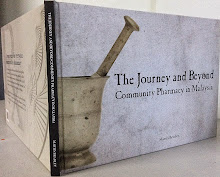
Catalogue with this article inside

Presentation of catalogue


This article


Thursday, 26 October 2017

'Awakening of Love; The Female Figures as Subjects in Art’, at Soka Gakkai, Kuala Lumpur

Sun Mother by Li Zijian

It is naive, perhaps, to believe that I could render justice to anywhere near the feeling one gets when visiting this exhibition. I cannot do the exhibition justice, for there are so many splendid worlds of art on show, and there is not time enough to go into the detail which would be needed to adequately review this year’s annual undertaking of an institution which takes both ‘Awakening’ and ‘Education’ seriously enough to want to impart both to citizens of this country. Thankfully, Soka Gakkai Malaysia has made a small, handy, book available, giving valuable insights into the exhibition, amidst a selection of images taken from the exhibition.

This intriguing exhibition - ‘Awakening of Love; The Female Figures as Subjects in Art’, currently running at Soka Gakkai Malaysia (in the Hong Wen Exhibition Hall) until 10th December 2017, develops along four main themes. They are - Myths and Legends and the concept of nobility (1), Motherly Love, and nurture (2), Devotion and Passion (3) and Individual Uniqueness, or the ‘true self’ (4). It is a large scope, for some daunting, but is skilfully accomplished through displaying some fifty two artworks, taken from the Soka Gakkai massive collection of art, in various mediums from ink on Xuen paper paintings to varieties of sculpture in wood and other materials.

As well as being an exercise in theme (Awakening of Love), the exhibition successfully reminds its public of the ability of Soka Gakkai to draw upon its collection to produce such a wide variety of stunning, and thought provoking, artworks. This is, or rather should be, the purpose of huge collections of art, to assist we, the general public, in becoming more familiar with artworks, and artists, aided by thoughtful presentations and knowledgeable curation headed, in this instance, by a Malaysian Institute of Art graduate.

Being (practically) a life long admirer of the works of Salvador Dalí, it would have been no surprise had I rushed to gawp at his ‘Venus with Drawers’ a small, pale blue ‘Pâte-de-Cristal and silver sculpture, which was standing towards the entrance to the exhibition. I did not rush to that Dalí. Instead, my attention was taken by two ink on Xuan (or Shuen) paper hangings, their intricacies, their similarities and their differences, and the real beginning of the show.

It is entirely appropriate that an exhibition enquiring into ‘Female Figures as Subject in Art’, within a Chinese setting, reveals (mostly) artists of the Chinese diaspora. This remind us of the differences between our cultures and notions of beauty (inner and outer), by firstly presenting ‘Western’ idealisations of the female form, encapsulated in notions of the Venus/Aphrodite mythos (Arman and Dalí), then countering these with a more traditional Chinese mythos with its materials and subjects, leading, naturally, into Eastern artists drawing from their knowledge of Western materials to depict their Easterness.

To the left is ‘Hua Mulan’ by Chen Yanning, an ink and colour on Xuan paper (1987) painting, the other ‘Wang Zhaojun’ by Huang Yao, is another ink and colour on Xuan paper (1982). The character Hua Mulan, (known to many through the Disney animation Mulan) appears in the ‘Ballard of Mulan’ (from the fifth or sixth century AD), seen written on the upper part of Chen Yanning’s ink painting. A daughter, skilled in the martial arts, disguises her gender and takes her father’s place in battle, fighting twelve years as a man. Alternatively Wang Zhaojun (also known as Wang Qiang) has come to symbolise physical beauty, as well as a spirit of goodwill bridging different cultures. She is dressed in red, holds aloft the Chinese musical instrument, a Pipa, and rides a camel. Her epic journey to Xiong Nu, her growth from maid of honour to wife of a king, her personal sacrifice, her trials and tribulations are marks of her, and our, tenacity and fortitude. Though both paintings are of a similar material, the styles vary enormously. Mulan is painted as strong yet demure, her face almost angelic and detailed. Wang Zhaojun, astride her camel, is more cartoonish with a very loose Chinese calligraphy suiting the needs of the illustration.

The exhibition is full of surprises. In completely different style and materials from those already mentioned, Li Zijian’s ‘Sun Mother’ at 164 by 264cm is one of the larger works gracing this exhibition. We stood before it, knowing that the artist Li Zijian hails from Shaoyang City, Hunan, China and, in the year this artwork was painted (2000) was engaged in a world tour called ‘Humanity and Love: Li Zi Jian World Tour’, which touched Malaysia too. ‘Sun Mother’ is part of the artist’s quasi-realist oeuvre which includes scenes of Tibet, shepherds high in the mountains, and portraits like that of Secretary-General Kofi Annan, from the United Nations. I was particularly drawn to this painting, not just because of its size, but its subject matter and use of the artist’s composition to direct the audience’s eye to one standing figure who’s eyes seem to follow the viewer around the room.

That subject’s serene face is realistically painted, while others of the grouping remain half finished, in a painterly style. From her face, the viewer notices that other areas of the large canvas are either detailed or roughly painted. We are led, from her face, across to the left hand side of the canvas where our attention is caught by bushes of red hibiscus flowers, called ‘Bunga Raya’ in Malaysia, (the national flower). Following a northern track from that bush we are led into the green splendorous idyll which is the Malaysian pastoral countryside. Various tones of yellow catch the sunlight on the costumes of young women. They are enjoying each other’s company, and are evidently rejoicing in the company of their children too. The whole is reminiscent of various scenes from Jules Breton’s paintings of women working in the rural French countryside, but with an emphasis on harmony and the delight in the company of women.

Further around the exhibition hall, ‘Loving Me, Loving You’ (2014), is an oil on canvas by Nanyang Academy of Fine Arts, Singapore, graduate Heng How Lin. Heng capitalises on his previous, tender, ‘Mother and Child’ series. The artist gravitates to warm, earthly colours to depict the natural love a parent has for a child. It seems entirely natural that Heng, in his four decades as an artist, should graduate to a more painterly artistic stance which seeks to involve his viewer more within the embrace of his work. 

Like his ‘Mother and Child’ (2014), in ‘Loving Me, Loving You’ Heng awakens latent energies within us which enmeshes with closeness, love and the embraced play between parents and children. It is a form of love which the Ancient Greeks understood, for they named it ‘Storge’. It is familial love, the automatic, natural, and life long bonding between children and parents. In his painting, Heng denotes the vibrance of that instantaneous movement of picking up children, encountering tender embraces, demonstrating that that utter closeness (of the parent child relationship) is, and can be, like no other. With the painterly ‘movement’ in ‘Loving Me, Loving You’ there is the beginning of the feeling of Pablo Picasso’s ‘Trois femmes’ (1908) or distant echoes of Boccioni’s Italian futurism, with all that canvas movement stopping short of losing the subject within Abstract Expressionism.

And so, back to that small Dalí, the ‘Venus with Drawer’ (La vénus aux tiroirs blue - Daum) dated 1988 and made from crystal, standing only 43 cm tall. The Daum website tells us that

‘Pâte de cristal is a rare and ancient glassmaking technique, which dates back to 5000 bc (pieces have been found in the tombs of pharaohs).in 1900 Daum rediscovered this technique that had been long forgotten, then further developed it in 1968.

The process of melting glass coupled with the lost wax technique that Daum has developed, ensures a perfect reproduction of the original piece just as the artist had imagined it. today, Daum is the only crystal maker in the world able to produce this exceptional material so perfectly.pâte de cristal is a mutable substance, which has translated every whim of the imagination of the master glassmakers for over a century, in this way, no two pieces are identical, because the fragments of groisil blend and merge at will as the crystal melts.’


Dalí has mischievously titled his piece ‘Venus with Drawers’, after the name of the original statue ‘Venus de Milo’, which is itself a misnomer. The original statue is not of ‘Venus’ but of Aphrodite, for it is ancient Greek, not Roman, and was created by Alexandros of Antioch, then found on the Greek island of Melos, in 1820. Throughout his lifetime, Dalí had been fascinated with the Aphrodite/Venus mythos, right from his earliest experience of making a clay study of the Venus de Milo as a child to his various ‘Venus’ incarnations include sketches dating back to 1934 and a half-sized plaster statue, made in 1936, replete with drawers and pom poms. In one drawing (Drawers of Memory, 1965) we are awakened to the concept of drawers as memory, hidden secrets. Perhaps awaiting an awakening.

I have teased with a small selection from the exhibition, in the hope that these words might encourage you, the potential viewer, to visit.

Wednesday, 18 October 2017

Malaysian Institute of Art (MIA) Journey 50


It has been a great pleasure, and an honour to be at two events in conjunction with the 50th anniversary of Malaysia's first academy of art.....the Malaysian Institute of Art (MIA), founded in 1967.

The MIA Fine Art alumni are a fairly tight knit community. Fifty years after Chung Chen Sun created the Malaysian Institute of Art (MIA), in 1967, its alumni continue to be close, to gather alongside their former tutors and are proud to continue to be part of Malaysia's first school of art.

Chung Chen Sun graduated from the illustrious Nanyang Academy of Fine Art (Nanyang), Singapore, and sought to replicate the best practices of that institution, in Malaysia. Although both Nanyang and MIA had a predominance of Chinese students, other races were, and are, most wellcome.

The Malaysian Institute of Art has housed some of Malaysia's best artists, as tutors, and produced a continuing stream of dedicated creatives in all manner of artistic fields.

Those associated with the MIA include Malaysia's foremost dancer Ramli Ibrahim, the noteable printmaker Loo Foh Sang, Malaysia's top Chinese ink and brush painter and calligrapher Dr Cheah Thien Soong, sculptor Chin Wan Kee, ceramicist Chao Hrn Kae, galleryist Warren Tan, singer Yudi Yap and a whole host of visual artists including Chung Chen Sun, Choong Kam Kow, Dr Foo Yong Kong, Tew Nai Tong, Sivarajah Natarajan, Sand T Kalloch, Phillip Wong.


Tuesday, 17 October 2017

The Blue Lotus issue 8

Caging Desire; Kexin Zhang's 'My 3 Kingdoms' Exhibition at Warren Art Gallery, KL.


"The bird should be allowed to fly, but only in the cage. If there is no cage, the bird will escape.” Chen Yun (God father of China’s "Bird Cage Economics”)

In 1986, Chinese economist Chen Yun explained his economic theory thusly…

‘The enlivening of the economy is permitted under the guidance of (state) planning,
and must not overstep the guidance of planning. This is like the relationship between
a bird and its cage, The bird must not be held tightly in the hand or it will die, It
should fly, but only within the cage; without the cage, it will just fly away,..,
Naturally the size of the cage has to be appropriate...[and] must be adjusted frequently.
(Chen, 1986, p. 287; quoted in Li & Lok, 1995, p. 290).

In the very heart of Kuala Lumpur, Warren Art Gallery presents the recent works of Chinese artist Kexin Zhang. Zhang was born in 1957, in Harbin, China, but has travelled widely, far from the land of his birth. In Zhang’s Kuala Lumpur exhibition, ’My 3 Kingdoms: Contemporary Art by Kexin Zhang’, the audience is presented with an array of Zhang’s more recent works, some on canvas, some ink on rice paper, some ink on silk, as well as a small collection of intriguing wood carvings.

The notion of ‘3 Kingdoms’ hails from the Chinese ‘Three Kingdoms Period (between 220 and 280) when Wei, Shu and Wu states warred against each other for overall supremacy. In his 14th century novel ‘Romance of the Three Kingdoms’ Luo Guanzgong wrote about those conflicts, legends, magic, and morality which formed both history and story towards the end of the Han dynasty. There is also some referencing to Chen Shou's ‘Records of the Three Kingdoms’, within Zhang’s artworks as presented.

Zhang reinterprets the concept of ‘3 Kingdoms’ through his personal experience of dwelling in three countries, Beijing (China), Jakarta (Indonesia) and Bangkok (Thailand). He is a self-proclaimed ‘nomad’. Despite Zhang’s notional freedom to travel, and his proclaimed nomadic nature, he constantly depicts himself with his head inside a birdcage, as if bounded by its constraints.

In a black and white photograph, in the inside page of the ‘3 Kingdoms’ exhibition catalogue, Zhang is pictured with his head inside a birdcage, replete with live sparrows. Two pages later a similar image occurs on page 3, this time in colour, while bottom left runs the legend ‘The Bird, Yogyakarta’s 1’, it is dated 2015. On page 4 there is yet another image of the artist, in black and white, in a birdcage, titled ‘The Bird, Yogyakarta’s 2, again taken in 2015, and the ‘head in a birdcage’ becomes a central motif for the exhibition. That motif is no mere whimsy, no empty gesture but featuring constantly within the exhibition. Zhang’s notion of being in a birdcage had already become a performance installation (‘You Can Touch Me’, 2016), part of the main theme for the launch of that year’s exhibition.

In that Warren Art Gallery exhibition, one large (96cm by 90cm) multi-narrative ink on rice paper painting,‘View Spot’, draws our attention to a figure dressed in a white gown, flailing his arms. That figure has a Chinese-style birdcage upon his head, a similar figure is seen (bottom centre) in the ink on silk painting, ‘Faith, The Bird’ (152cm by 113cm) looking furtively around. The figure is, of course, Kexin Zhang; the birdcage may be seen to represent a notion of Chen Yun’s limitations of the individual, within a Chinese Communist society. It is a society where people are free but only within certain, malleable, limits. But I want to nomadically explore another interpretation.

Other paintings in Warren Art Gallery, incorporate the artist within his works, indicated in ‘Farewell the Lonely Island’, ’From Bangkok to Beijing’ and ‘Looking for the Spiritual Home’. Zhang becomes the chief character, as well as author, of his narratives. Zhang is very much the ‘My’ or me/I in his ‘My  3 Kingdoms’.

The Catalan painter Salvador Dalí had, narcissistically, placed his own image into his paintings, mixing the dream of Dalí with reality of Dalí in his Surrealist fashion. Zhang, alternatively, poignantly reminds his audience whom the paintings are about, giving his audience indications to the predicaments he finds himself, and his societies, in.

Rene Magritte, in 1937, painted ‘The Therapist’, where a man’s whole upper torso and head are a birdcage. In 1938, Raoul Ubac (Belgic painter, sculptor, photographer and engraver), had created ‘Mannequin dressed by Andre Masson, Exposition Internationale du Surrealisme’. A naked mannikin, breasts exposed, has her head caged in a wickerwork cage, her mouth bound with towelling and a flower over her lips. She is exposed and must remain silent, unable to object to her objectification.

In 1965, Salvador Dalí had persuaded Danish actress, Lotte Tarp, to be photographed by Werner Bokelberg, at Dalí’s home in Port Lligat, Spain, with a four tier birdcage on her head. Just seven years later, in 1972, at Marie-Hélène Rothschild’s infamous Surrealist Ball, just outside of Paris, the actress Audrey Hepburn arrived with her head in a wickerwork birdcage filled with token ‘birds’.

In many aspects the head in a birdcage has become a trope. Surreal images of people with their heads in birdcages is not new. Similar images hail back before Surrealist imagery, back to monstrous devices such as the medieval ‘Scold’s Bridle’, essentially a cage with a mouthpiece which prevented talkative women from talking. The most gruesome is the public death exhibiting ‘Gibbet’ - a full body, metal, cage where criminals were left, dead or dying, until their flesh fell from their bones.

The Birdcage analogy is particularly poignant to Chinese society where, for centuries, Chinese people have prized their birds in cages. Hua Mei, song thrushes, found mostly south of the Yangtze River, in China, are particularly popular. Some owners keep their cages covered, with the cover being removed at sunrise, for the bird to sing. Owning a good bird cage had become a symbol of social status of Chinese rich men, or high officials, in pre-Communist China.

Chinese Bird cages, some gilded, some decorated with decorative, intricate, wooden patterns, are nevertheless still prisons. This idea came to fruition in Chinese feminist dialogue, in the 1930s, with the film ‘New Women’ (1935) and those splendid performances by the actress Ryan Lingyu, playing the housewife We Ming. In Cai Chusheng’s film ‘New Women’, marriage is equated to the entrapment of a birdcage, demonstrated in the frames of Wei Ming (the tortured housewife), who is unable to go out with her husband, clasping her hands and woefully looking at two birds in their birdcage as the realisation dawns that they and she share a similar fate.

In her 2012 work, ‘The Birdcage’ (photograph on plexiglass substrate), the artist Mei Xian Qiu, formerly of Java, Indonesia, now living in Los Angeles, North America, ‘talks’ about the psychological repression of women in society. In much the same way as Cai Chusheng’s film, she equates freedom being exterior of the birdcage, the place which entraps her mind. The central figure’s head (her mind) is encased in a birdcage, her seductively dressed body, replete with alluringly red lipstick painted lips, is free. A yellow (happy, wise) canary, the previous occupant of the cage, now remains uncontrolled and able to sit atop of the cage. The fetching woman becomes the new captive. This photograph reminds the viewer of Zhang’s male figure, dressed in white, with his mind trapped with desire for the trappings of modernity and of the body, which are his birdcage.

In his artwork ‘The Packing Box, from Beijing to Magelang’ (2016) Zhang reveals a large wooden box. The box is full of the ideas, memes and metaphors he has brought with him, from China to Indonesia. The man with the white robe and birdcage on his head escapes. Like a child playing aeroplanes, the figure runs from the box, exhilarated to be free. But he is not free. His head remains caged. His thoughts bounded by the bars of the physical cage, just as Chen Yun’s limitations brought a false sense of economic freedom to China with the trappings of materialism and consumerism, but without a comprehensive access to the knowledge of the full internet, which forbids sites such as Google and YouTube.

Throughout Zhang’s exhibition, images of physical and psychological desire, for houses, cars (‘I Live in Gray and Blue’) demonstrate how firmly we become imprisoned by our desire, the source for our suffering. Despite imprisonment, we attempt to break free, drift in imaginary boats to encounter spiritual awakening. Nature in all its natural gentleness awaits, but our ancestral culture, and possessions weight us down (‘Looking for the Spiritual Home’). Through ‘Meditation’ we are released, though to become so we need to divorce ourselves from the weighty desires which surround us. We must seclude ourselves in nature (‘Lonely Island’), away from intellectualism, away from the erotic thoughts which trouble us and, ultimately, cause our suffering (wood carving ‘The Thinker’).