Saturday, 23 January 2010

Zulkifli Yusoff – A (n) Historical Survey 1996 – 2009

For an out of towner, or maybe even an in-towner, you have to be pretty determined to seek out Jalan Changkat Duta Kiara, in K.L.’s Mont Kiara. Bearing in mind that Mont Kiara is not mentioned on road signs until you are virtually on top of it, and the fact that you have to be agonisingly shrewd to understand that Sri Hartamas is a prelude to Mont Kiara. Once again, it is a case of having to know where it is, to know where it is.

Geographical Location taken into account, it is a shame that the gallery is difficult to locate, because Zulkifli Yusoff’s partial retrospection exhibition, in Art Salon @ Seni, is a fascinating exhibition to visit.

Once you have by-passed the, seemingly permanent, builders’ yard of Jalan Changkat Duta, and entered the building, housing the underground exhibition, you are greeted with lounging dust-covered labourers and a telephonist/ receptionist wearing a paper mask. Not exactly the ambiance of a modern art gallery, but you have to be very, very patient, because the good stuff is below, down a flight of stairs, amidst boards propped against walls containing oddments of plastic pipe and baffling objects unconnected to the exhibition.

However, to be fair, I did arrive on the morning of the launch, one full day before the exhibition was due to open, at least according to the catalogue. According to other (internet) sources, the exhibition opened on the 6th of January, such is the (lack of) communication regarding these events.

To get to the ‘art,’ and by this time it is beginning to seem like the twelve labours of Hercules, you have to first slide past the young lady who, apparently, knows little about the exhibition – including the name of the artist, prominently displayed a few feet from her. For when she asks, “How did you know about the exhibition” and you reply, “The artist, Zulkifli Yusoff, told me of it,” she says - “Who.”

If you are really, really, patient then finally, and at last, you set sight on the exhibition itself, and with a huge sigh of relief, all those concerns just melt away, as, once again, Kuala Lumpur delivers yet another stunning display of some of the finest art in the world.

You may have caught Zulkifli Yusoff’s installation - ‘Merdeka 57’ during the ‘Go Block’ exhibition, at the Petronas Gallery, third floor, Suria KLCC (last year), or his installation - ‘sedangkan lidah lagi tergigit,’ (sometimes you have bitten your own tongue) fronting the upper galleries, at the Kuala Lumpur National Art Gallery (NAG). If you did, then you might have some sort of idea of the artist’s imagery in this latest exhibition.

If you did not see any of the artist’s previous exhibitions, then let me explain that, much of Zulkifli Yusoff’s latter works engage the exhibition visitor with acrylic printed image juxtapositions. They are sign and symbol concurrences in the manner of Pop Artists Peter Saul, Peter Phillips or even the inimitable Gilbert and George.

Zulkifli Yusoff flexes this flat style to draw disparate images together to form a distinct narrative, which frequently relates to the emergence of Malaysia, from Malaya, and consequentially reveals conceptualisations of identity and place.

From screen printed images of war (planes and Samurai swords), film images of illustrious film idols - P.Ramlee and Saloma, up to and including a Time magazine cover proclaiming a new nation (Malaysia - April 1963), Zulkifli Yusoff reveals what it has meant, semiotically and symbolically, to be Malaysian, unshackled from the colonial yoke.

Weaving a comprehensive tapestry of imagery, from the 1940s, 50s and 60s, Zulkifli Yusoff achieves a narrative concerning an outsider’s view looking in (Ken Anakin’s - The Planter’s Wife, starring Claudette Colbert and Jack Hawkins, 1952) and an insider’s view looking out (R. Azmi and the afore-mentioned P. Ramlee). This, with the greatest of fortune for the onlooker, is not done is any dry, dull, academic exposition, but rather in a colourful, joyous, intriguing revelation which, while in one sense looks back to the works of Rezda Piyadasa, simultaneously looks forward to a fresh, exciting era of contemporary Malaysian art.

As this is a partial retrospective of Zulkifli Yusoff’s work, there are many themes displayed other than the Malaya Series (2007 – 2009). This display, essentially, covers glimpses of the artist’s work from 1996 to 2009, but, sadly, excludes his magnificent installations, for this is a selling exhibition, in a private gallery, outside the remit of full retrospectives.

The few initial series, which grace the comfortably lit walls of the Art Salon @ Seni gallery - Brave New Art 1996, Brave New Art 1997, Ahmad and Jibul 1997, Reformasi Series 1999 and Current Event Series 1999, all hint at the Expressionism of a Malaysian James Ensor, or an Asian Emile Nolde.

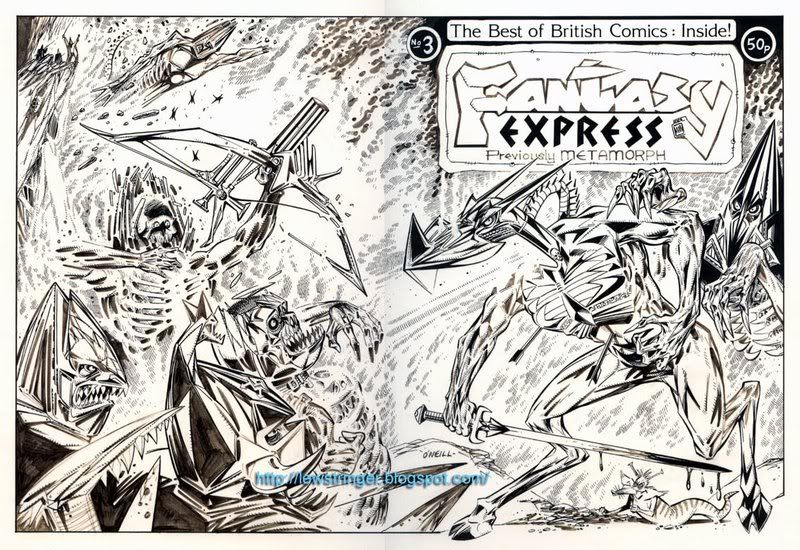
The artists ‘expressionism’, however, moves ever toward abstract, with a further two, intriguing, works, strangely reminiscent of the Latin American artist Wilfredo lam and the character Nemesis the Warlock (from the comic 2000AD) drawn by Kevin O’Neill.


These abstract images form part of the Early Malay Sketches series (2007 – 2009) - Jeligan (out of the corner of the eye) IV and Jeligan V, are oil painted, abstracted works full of painterly movement and dynamism. These artfully constructed canvases reflect the artist’s interpretation of short stories written about Malaya, by the first Resident General of the Federated Malay States - Sir Frank Swettenham (Malay Sketches - 1895). However, these canvases are not without their own air of cynicism - a gently cocked snook at Swettenham and colonialism, perhaps.

Whether it is Zulkifli Yusoff’s abstract expressionism or his latterly, Pop Art influenced, works there is a delicious thread of humour, or downright cheekiness, which seems to unite what, otherwise, might appear as a disparate collection of the artist’s work.

Early work in the exhibition draws upon cartoon and caricature, especially Ahmad and Brave New Art series, while the Malaya Series references popular culture, song and imagery contemporaneous to the decades 40s, 50s and 60s, to make its point.

In Malaya Series Study II (2009), twin images of actress Saloma, and actor/singer/ director P. Ramlee, radiantly smile from the canvas, amidst images of red roses and multiple images of romantic hearts. The smiling eyes and inviting mouths of these bygone idols appeal as infectious, provocative, reminiscences of romantic nostalgia, causing the infected viewer to smile in mirrored reflection, even if a little bemusedly.


On the other hand, humour extending from Malaya Series Study I and from Itik Pulau Pinang (Penang Duck) II and Itik Pulau Pingang II is a different form of humour, a cheeky, nudge, nudge, wink, wink humour, lustily delighting in equating a curvaceous woman’s swaying walk, with that of a waddling duck. This sentiment is revealed through the lines of R. Azmi’s song - Nona Singapura (woman from Singapore -1940s), occurring, at least in part, in each of these paintings, emphasising a forlornly bygone ribaldry.

Even in the more serious work - (no more coffee for you sir - 2009) the viewer continues to be provoked to grin at smiles on the faces of both Claudette Colbert and the Malay, songkok wearing, waiter, in this still from The Planter’s Wife. However, it is a very different type of smile, which attaches itself to the viewer’s mouth, more of a ‘knowing’ smile, brought about by the picture title’s dual meaning. Within this picture, amidst the familiar kopi tiam cups, saucers, Malaya stamps, teapots and cut fruit the title resonates - at once referring to a lack of coffee/ more coffee unavailable, or, alternatively, and specifically, no more coffee for the colonials/colonial time is running out for the planters and their wives.

There is much that I have not mentioned; including the Hot Temper Series (2005), and the First Malaya Series – The Planters (2008). It really behoves a visit to the gallery, to see the works face to face. All I can do, here, is give a glimpse of this mini retrospective and begin the process of exposition. I eagerly look forward to a major retrospective, perhaps at one of the larger galleries, nearer to the city centre where more people will be able to access the fine imagery and delicate symbolism of Zulkifli Yusoff’s work.

Zulkifli Yusoff – An Historical Survey 1996 – 2009
Art Salon @ Seni
SENI Gallery
Lot 55350, Changkat Duta Kiara, off Jalan Duta Kiara, Mont Kiara, Kuala Lumpur.
16th January to 20th March 2010
www.theartgallerypg.com

Wednesday, 23 December 2009

Saturday, 12 December 2009

Cinema in Paradiso?

Perak once again rings to the unique, and some might say quite mystifying, sounds of camera tracks being laid, spotlights being erected, dollies being pushed, best boys, props masters, carpenters, costume designers, an earnest producer wrangling and an eminent director directing. Yes, the illustrious and industrious film people are back in town.

For more than a delicious decade Perak has been a favoured spot for enterprising film crews, be they TV or cinematic. Malaysia’s lushly green and mountainous state draws eagle-eyed location hunters like bees to nectar, mainly due to its immense natural beauty, and because it still has enough antique buildings left standing to represent any number of bygone ages. Though, at the present rate of ‘renovation’ and upgrading, one wonders if Ipoh and its surrounds will have any aged buildings left the next time a film company comes to call.

Back in the early 1990s, a Gitane smoking, baguette munching French film crew descended upon Perak, bringing the illustrious, and, I for one, might also say quite delectable, Catherine Deneuve with them. There they made that masterpiece of French cinema – Indochine (1992). It is rumoured that a certain Robert Raymer, Malaysian writer- par excellence, also had a cameo role in that film. Time moves inextricably on and a little later the English film Director John Boorman brought Patricia Arquette to Perak, to shoot Beyond Rangoon (1995).

Anna and the King with Chinese actor Chow Yun –Fat followed in 1999. Local film maker Amir Mohammad made his, subsequently banned, The Last Communist, here, released unseen in 2006, while another local boy, local to Ipoh that is – Patrick Teoh, TV/movie star, writer and former radio personality, starred in Kinta 1881(2007), also made around Perak. In the very same year Crouching Tiger, Hidden Dragon man, Ang Lee, got us all hot and bothered by filming Lust, Caution (2007) in and around Ipoh’s old town. Maybe the kopi drew him.

Now it is the turn of local film and TV director Bernard Chauly, Red Communications and Astro TV, who are making an eight-part series concerning the Second World War heroine, mid-wife and resistance fighter Sybil Kathigsu.

Filming started recently in Papan, utilising local traditional houses as well as the actual building where Sybil had set up her dispensary and, later, free clinic. Bernard Chauly, known for his recent film Pisau Cukur (Gold Digger, 2009), and Goodbye Boys (2006) has brought Elaine Daly, former Miss Malaysia (2004), known for her numerous film and TV roles, to play the role of the brave Sybil Kathigsu. This is entirely fortuitous, as Ms Daly is a dim distant relative of Sybil’s.

The Astro Citra eight piece series, of one-hour episodes, which incidentally forms part of the Suatu Ketika (a Time in the Past) sequence, has a working title of Apa Dosaku (What is my Sin). This new TV series follows Sybil from the Japanese occupation of Ipoh, to its eventual liberation, by the British. The TV series comes after the enormously successful theatre production –Sybil, which was a two-act play directed by Dato Faridah Merican (2008) based upon Sybil’s collective memoirs – No Dram of Mercy (1954).

In October of 2009 a resounding call went out for local participants to appear at auditions in November. Actors, extras, Eurasians, Chindians, Malays, Indians and an assortment of other races were needed to appear in this new production of the Sybil story. Many came but few were chosen. One local enthusiast, Audrey Poh, Ipoh book club member, part founder of Perak Heritage Society, former committee member and secretary of the Perak Society of Performing Arts answered that call. In the Red Communications production for Astro Citra, Audrey girds her loins to play Sybil’s best friend, and the godmother to Olga, Sybil’s younger daughter.

Law Siak Hong, esteemed current president of Perak Heritage Society, creator and curator of the Papan museum for everything Sybil, has been working closely with producer Anne Rodrigues, director Bernard Chauly and their hard working film crew, to make everything run as smoothly as possible during the shooting for the production.

Contrary to what I have written above, the Red Communications film crew have been diligently subtle in their approach to film making, perhaps adhering to Star Trek’s Prime Directive (Starfleet’s General Order #1) of non-interference. Despite the film crew working in the town, Papan is barely disturbed. It is only the interior ‘shots’ which require some minute disruption to daily lives, with puzzled house residents looking on, perhaps somewhat bemused by the coming and goings.

‘Apa Dosaku’ (What is my sin) airs on Astro Citra channel in March 2010. It is an eight-part series, of one-hour episodes, under the Suatu Ketika banner .

Who knows, maybe, someday, someone might make a film of Tash Aw’s The Harmony Silk Factory, set in and around the Kinta Valley.

Friday, 11 December 2009

Expressions in Three Angles?


The Malaysian National Art Gallery – Balai Seni Lukis Negara, which might otherwise be called a museum of modern art, currently hosts a retrospective of one of Malaysia’s most esteemed artists – Syed Ahmad Jamal; celebrating his eightieth birthday, and almost sixty years devoted to art and art criticism.

Born in Muar, Johor in 1929, Syed Ahmad Jamal, like many Malaysian artists of his generation, studied arts in England. Syed Ahmad Jamal studied architecture in Birmingham, England (1950), and later painting in the renowned Chelsea College of Art, London, notable for having Leonora Carrington and Edward Burra as alumni. His resume extends from teaching art, art teacher training, through to heading up the National Museum of Art (now National Art Gallery), as director (1981 – 1993). In 1995, Dato Syed Ahmad Jamal was honoured with the National Art Award and has become known as the Malaysian National Art Laureate.

Pelukis, the current Syed Ahmad Jamal retrospective, affords the National Art Gallery visitor with an uncluttered view of the artist’s professional and individual progression. The exhibition reveals paintings from the artist’s cubist and expressionist inspired 1950s works, through his more abstract phase in the late 1960s, and into the 1970s, right up unto the more spiritual, yet still expressionistic works in the 2000s. The artist’s work spans a time from Battersea Park II (1956) to M50 (2007).

This major retrospective does what retrospectives tend to do best – give the exhibition/gallery visitor a chance to witness, for themselves, the artists’ progression/growth into his craft. It allows the caller to observe the roads not taken, and the paths followed with the ‘becoming’ of a painter such as Syed Ahmad Jamal.

From the painter’s early works, executed during the 1950s, the links to both Cubism and Abstract Expressionism are self-evident. In Battersea Park II (1956) the colours and forms of German Expressionist and Blue Rider (Der Blaue Reiter) founder Franz Marc are quite clear. Nipah Palms (1957), Mani Laut (Sea Bathers -1957) Padi Field Morning and Padi Field Night (1958), emerge from a fondness for the later cubist works, which slip quite easily into Abstract Expressionism, reminiscent of that father of Cubism Georges Braque.

A few years later, during the 1960s, Syed Ahmad Jamal is seen experimenting with more obvious forms of abstraction, edging out of Cubism with the neo-Expressionistic Hararpan – Hope (1962), until in 1967 he produces Pfft and in 1968 Windows in the Sky, then in 1970 - One Fine Day. To some extent both Windows in the Sky and One Fine Day are painterly breakthroughs leading the artist into fresh mode of expression, ground zero for the next thirty plus years of the artist’s image making. By the time Syed Ahmad Jamal has completed One Fine Day, the artist is forty years old.

Forty is a reasonable age, in some it is the age where they start to settle down, lose the anger of youth and approach life from a more considered, perhaps even philosophical viewpoint. It is a time when we stop searching for who we are. Instead, we begin to become who, and what, we are. We become aware of the differences between what we know about ourselves, and what others observe, what we present and what is hidden, as revealed in the Johari Window. We begin the true process of what Jung called ‘individuation’, or making ‘whole’. What we can observe in Syed Ahmad Jamal’s work from the age of forty onward, is a predilection for images of triangles and a growing visual, spiritual, symbolism.

Gunung Ledang (Legendary Mountain [Mount Ophir] 1978) may not be the first use of the triangle in the works of Syed Ahmad Jamal, but, without doubt, it is the most significant. Perhaps Catch a Falling Star (1967) is the first. In Gunung Ledang, using a triangle device, the artist presents his viewer with what may be described as a mountain, hence the Gunung of the title. Yet the triangle stretches from the base of the canvas through to the last third. Bars construct the triangle, which may be perceived stretching into the perspectival distance, representing a ladder. The ‘window’ device from ‘Windows in the Sky’ is now green. At the top of the canvas small green triangles ‘float’. This is one of a series of works, which the artist has painted about his birthplace, the myths and legends pertaining to there, while maintaining the depth of symbolism within the artist’s expressionism.

A Malay myth informs that the mountain - Gunung Ledang, previously known as Mount Ophir, in Johor, was where a beautiful princess (puteri) lived. Having rejected many suitors she eventually married Nakhoda Ragam, only for the marriage to end in disaster, the death of Nakhoda and the return of the princess to her mountain - Gunung Ledang.

The triangle from this point on, in Syed Ahmad Jamal’s painting, becomes a leitmotif, a recurring theme throughout his work. Symbolically, of course, the triangle may come to represent any number of things. Visually the triangle may depict stability, power, strength, inverted may denote dynamism. The triangle is the simplest figure to which all polygons may be reduced, and, for some, a representation of harmony because of that.

The artist’s use of the triangle may be an allusion to the Islamic symbol of consciousness incorporating the ‘knower’, the ‘act of knowing’ and the ‘known’. Further speculation may arrive at the triangle as ‘Taqwa’ (God consciousness), Ramadan (fasting) and Qur’an (guidance), the vital trilogy to lead a spiritually healthy and rewarding Muslim life. On the other hand, it may simply be, as others have noted before me, an image etched into the artist’s mind, forever forming part of his consciousness, growing up, as the artist did, under the shadow of the mystical mountain.

Of course, there is artistic precedence for overt use of the triangle in painting. From the works of Kandinsky (Composition IV, 1911), Kazimir Malevich (Suprematism with Blue Triangle And Black Square, 1915), Paul Klee (Ad Parnassum, 1932) the triangle is prominent. To some extent, this is also true of the father of them all – Paul Cezzane; when he demonstrates the harmony of the triangle with Large Bathers (1899-1906), with trees and ground arranged to form a triangle, in which the bathers sit.

It seems poignant that the triangle should appear, and keep reappearing throughout the body of Syed Ahmad Jamal’s work from his own middle age, in the late 1970s, until the present. As life slips from youth, into older age, spirituality plays an increasingly larger role in life.

Endau Rompin (1985) (one of Malaysia’s national parks, in Johor -the artist’s birth state) features a triangle of foliage with a rainbow highlighting one of the triangle’s sides, another is delineated by what appears to be rain, the third is marked by a river – the River Endau of the name.

Sirih Pinang (Penang’s betel leaf) (1986) comprises of four triangles, meeting at the canvas centre. It would be mischievous to try to explain the triangles as representative of the four elements, though without too larger stretch of the viewer’s imagination earth, water, fire and air could be discerned. Art Nouveau betel leaves tumble in the foreground while the sky is punctuated by small variants of the triangle.

In a similar mode Palestin is dominated by a central red triangle, the canvas a tricolour of black, white in the centre and green at the bottom. In the black third are red triangle shapes. Mercu Wawasan (1997) although dominated by the concept of the Petronas Towers, also reveals triangles, one bottom centre canvas stretching to the bridge linking the two towers, while another reaches from top right canvas down to one third of the distance from bottom left to bottom right. Semangat Ledang (1999) has as its centrepiece a triangle, though partially obscured with flashes of yellow and red light. The tip of the larger triangle is revealed out of ‘cloud’ while a burst of white triangular light is emitted from the large triangle’s center.

There are many more, but I should like to leave you considering this one last painting by Syed Ahmad Jamal – M50 (2007). M50 as its name denotes, is a celebration of Malaysia in its fiftieth year. Unlike other paintings M50 has more of a Miro feel to it. There are two triangles, neither too dominant in the picture, surrounded by the apparatus of technology and prominent symbols – a number 1, question marks and a fragment of the British Union Jack (flag). Has the triangle of harmony, strength, God-consciousness finally been eclipsed by modernity. Is the triangle mountain, and its legends, being overwhelmed by man’s technology. I will leave that for you to decipher.

Pelukis, a retrospective of the work of Syed Ahmad Jamal is on at the National Art Gallery, from 6th October 2009 to the 31st January 2010, Gallery 1A.

Friday, 4 December 2009

What is my Sin

The rain had stopped. My aging jeep eased into the quietly forgotten street of Perak’s Papan. I had expected to see the town inundated with the paraphernalia of filmmaking – tracks for cameras, huge spotlights threatening to fall on unsuspecting bystanders and a dictatorial director bellowing out instructions/orders vis-à-vis Cecil B. Demille.

Bernard Chauly, of Red Communications Sdn Bhd, is a much quieter director, who seems to believe in keeping the filmic disruption to a bare minimum. He, his producer Angela Rodrigues, their team of talented actors and crew came together at Papan, to reveal the story of that town’s Second World War heroine – Sybil Kathigasu.

TV channel Astro Citra (available in the Mustika pack) commissioned Red Communications, as part of their ‘Suatu Ketika’ (a Time in the Past) series, to make an eight-part drama, of one hour episodes. This story follows the extraordinary account of Sybil Kathigasu (played by Elaine Daly), from the moment she hears of the Japanese invading, through her experiences in the anti-Japanese resistance movement, and beyond. The series closely follows her collective memoirs, first published in 1954 as ‘No Dram of Mercy’.

Sybil Daly, a Eurasian mid-wife, born to an Irish-Indian planter father and French-Armenian mother, was married to Dr Abdon Clement Kathigasu, in 1919. She ran a clinic at 141 Brewster Road (now Jalan Sultan Idris Shah), Ipoh. When the Japanese invaded Ipoh (December 1941), Sybil escaped to run a shop-house dispensary at 74 Main Road, Papan. It is there that Sybil’s story really begins.

As time, and the Japanese occupation, wore on, Sybil’s dispensary, which by then doubled as a free clinic, eventually gained access to a shortwave radio, tuned into BBC broadcasts. From that time, the dispensary slowly became the central point for information and local dissidence.

Over time Sybil, in her husband’s absence, tended injured guerrillas, brought to the clinic at night. She was pro-colonial and disagreed with the ethics of the burgeoning communist guerrillas, but was a staunch humanitarian and realised that the guerrillas and she had a common enemy – the Japanese occupation force.

First her husband was arrested by the Japanese, next came Sybil. Expert Japanese interrogators, who were trying to extract vital information about the Chinese communist guerrillas, tortured Sybil. She was beaten, malnourished, sleep deprived and generally maltreated in the Japanese quest to learn more from her.

As if was not enough, Japanese interrogators arrested and tortured Sybil’s children too. In their quest for information, Sybil’s youngest daughter Dawn (aged 7) was hung from a tree, suspended over a fire while Sybil watched and was severely beaten. Luckily, Dawn survived her ordeal. Sybil, sentenced to death, had her sentence commuted to life imprisonment in Batu Gajah Prison - her husband, and adopted son William, imprisoned in Taiping Prison.

The British liberated Malaya in 1945, releasing Sybil from her incarceration, her near fatal wounds treated in Batu Gajah Hospital, Perak. Still in pain, Sybil spent her last days in England, undergoing operation after operation to salve her pain-racked body. Sybil Kathigsu, awarded the George Medal for bravery in 1947, died in England, still in pain, June 1948.

It is only fitting that the actress who plays the role of the heroine Sybil in the eight part TV series, is none other than Elaine Daly – a well-known Malaysian actress, former Miss Malaysia Universe, and a distant relative of Sybil’s.

I drove away thoughtfully. I was considering my day - whether to take director Bernard Chauly up on his offer of a one-line speaking role, or not. On reflection, maybe Malaysian TV is not quite ready for me – yet.

Working title – ‘Apa Dosaku’ (What is my sin) airs on Astro Citra channel in March 2010